From the first phone call to the first visit
Usually about a week, and faster when a hospital discharge is driving it. Nothing is committed to until you have seen the plan and the price.
-
The first call
You tell us what is happening, we ask a few practical questions, and we say plainly whether we can help. If a health authority assessment, an adult day programme or the Alzheimer Society would serve you better, we will tell you.
-
A free assessment, at home
A care coordinator visits, talks with the person receiving care (not just about them), and looks at the home itself: the stairs, the bathroom, the route to the front door.
-
A written care plan
A plan you approve before anything starts: which tasks, at what times, and what the caregiver should watch for. Each visit is at least two hours, so there is time for the care itself and not only the arrival. The plan is updated as needs change.
-
Matching a caregiver
Matched on skills, language, location and personality. If the match is not working, tell us early and we will change it.
-
The first visit
Where we can, we introduce the caregiver before the first visit, so nobody arrives as a stranger. For someone with dementia, that matters a great deal.
-
You see every visit
Arrival and departure, each task as it was recorded, and anything the caregiver noticed, once our office has reviewed it. Family members see only what they have been given access to. We review the plan as needs change, including recommending fewer hours when someone needs less help.
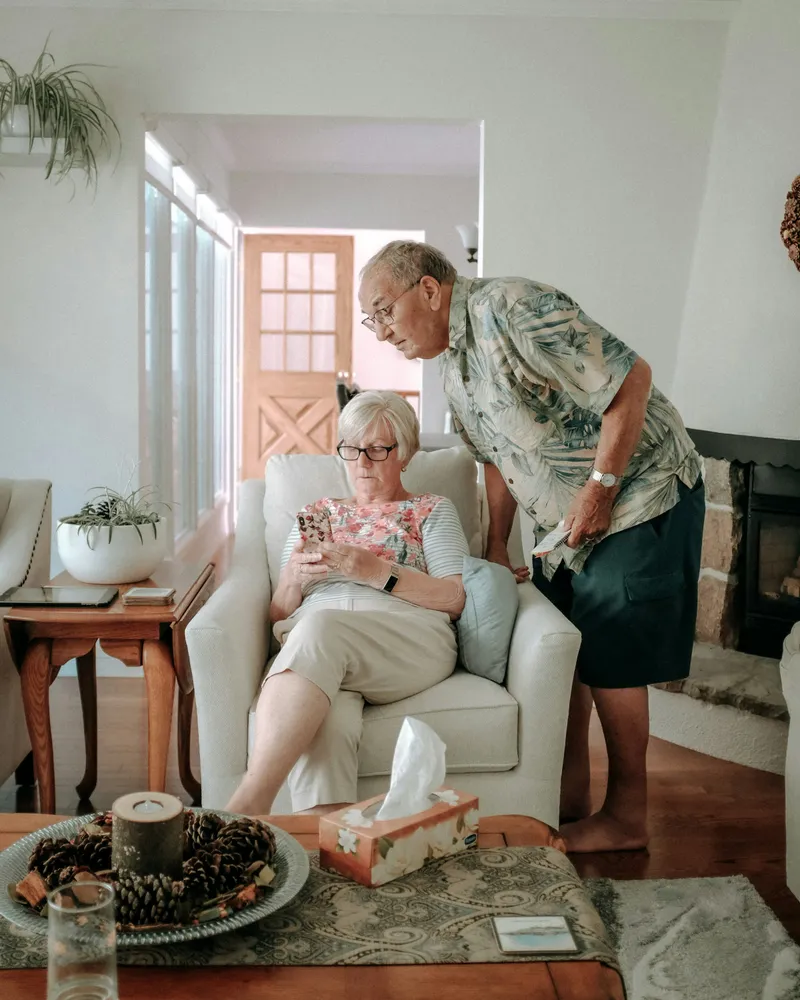
What an hour in your home actually covers
So that nothing about the visit is a surprise, and so you can tell the difference between an assessment and a sales call.
- What the person can do, wants to do, and would rather have help with
- Mobility, transfers, and whether one caregiver is enough or equipment is needed
- The bathroom, the stairs, the lighting, the floor coverings
- Medication: what is prescribed, what is in the cupboard, and whether those match
- Who else is involved: family, a GP, a health authority case manager, a physiotherapist
- Who holds decision-making authority, and what has been recorded
- What the family caregiver is currently carrying, and how sustainable that is
- Practical access: keys, buzzers, parking, a dog that needs warning about
How to tell a sales visit from an assessment
Notice who does the talking. If nobody asks the person receiving care what they want, and if the visit ends with a contract rather than a plan, you have had a sales call. That applies to us as much as anyone.
What you can see, and when
Caregivers record each task on their phone as it happens, not from memory hours later.
- Arrival and departure, recorded as they happen.
- Each task, as completed, declined, not needed, or could not be done, with a reason.
- What the caregiver noticed, which is often the most valuable thing in the record.
- Who has opened the file, including our office staff. The client can see every access.
- Only what has been shared with you. Family access is granted per person and per category, by whoever holds decision-making authority.
Amara, your regular caregiver
Today · Arrived 9:02am · Left 11:04am
- Breakfast and medication reminder
- Shower and dressing
- Light housekeeping
- Walk to the park and back · Could not be done · Weather
Getting started
How do we get started?
Call us, or send the contact form. We will talk for fifteen minutes about what is happening and whether we are the right answer. If we are, a care coordinator visits the home, free and with no obligation, and writes a care plan with you. Care can usually start within a few days of that visit.
What makes Brilliant Homecare different from other home care agencies?
We run on our own care software, built so our standards are enforced rather than promised. Caregivers check in and out on their phone, with the location checked against the client's home, and record every task as it happens. If a visit has not started fifteen minutes after its time, our office is alerted automatically. Visit records and notes cannot be edited or deleted afterwards: a correction is added beside the original. Every time someone at our office opens a client's file it is logged, and the client can see that log in the app or ask us for a copy. A caregiver whose criminal record check or first aid lapses cannot be scheduled until it is renewed. Family see only what they have been given permission to see. Ask any agency you are considering how they do each of these.
Which areas do you serve, and where is your office?
We provide home care in Coquitlam, Vancouver, Burnaby, Richmond, North Vancouver, West Vancouver, Surrey, Port Moody, Port Coquitlam and New Westminster. Our office is in Coquitlam, but care happens in your home, and so does the free assessment: a care coordinator comes to you. If you are just outside those cities, ask us about your address.
Is there a minimum number of hours?
Yes: every visit is at least two hours. Short visits sound efficient and are not: by the time a caregiver has arrived, washed their hands, read the plan and greeted the client, a thirty-minute visit is mostly logistics. Two hours means the time you pay for is time spent with the person.
Are we locked into a contract?
No. A service agreement sets out what we will do and what it costs, and either side can end it with notice. We do not ask for a lump sum up front.
Talk to a care coordinator
A fifteen-minute call, no charge and no obligation.