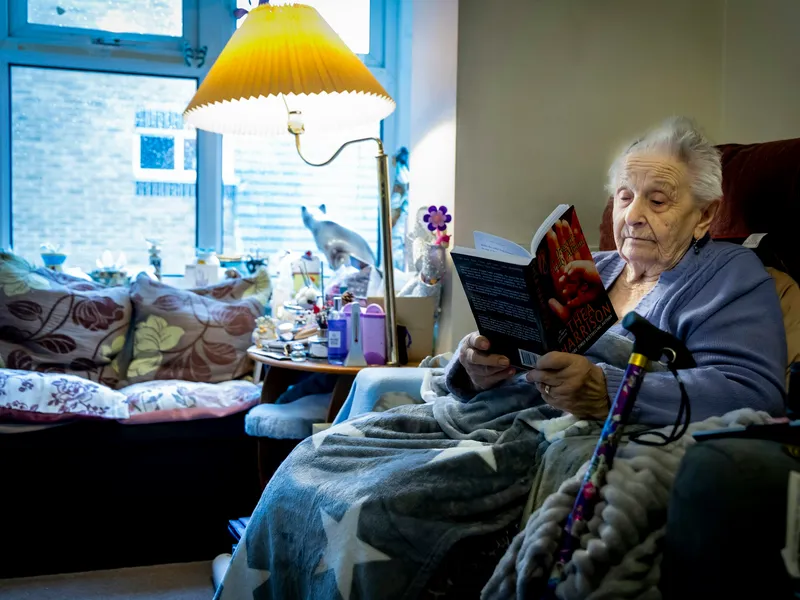
Choosing a home care provider usually happens in a hurry, at a hard moment. These are the questions worth asking every agency, including us. Be wary of any answer that is a feeling rather than a fact.
Our answers are underneath each question.
Screening and credentials
1. Is every caregiver registered with the BC Care Aide & Community Health Worker Registry? Registration is mandatory in publicly funded settings and entirely optional for a private agency. It is the clearest single signal of whether an agency has adopted the province’s standard or invented its own. Us: yes, every care aide, without exception.
2. Do you verify credentials with the issuing body, or accept a copy? A photocopy proves a certificate existed once. Registrations can be suspended. Us: we verify against the issuing body and re-verify on a schedule.
3. What criminal record check do you require, and how often? The Criminal Records Review Program check for work with vulnerable adults is required every five years for funded, licensed and contracted organisations, and it is not required of a private agency at all. Us: CRRP for vulnerable adults, on every caregiver, renewed on the provincial cycle.
4. What insurance do you carry, and does it include abuse and molestation coverage? General and professional liability are standard. Abuse and molestation coverage is frequently excluded from standard policies, and it is precisely the cover that matters when the worst happens. Ask specifically. Us: we carry liability insurance, and we will tell you exactly what it covers.
Clinical scope
5. Which tasks need a nurse, and how do you handle them? Restricted activities, such as complex wound care, injections, catheter care and medication administration, are reserved to regulated health professionals. An unregulated care provider may perform one only under a formal delegation from a nurse, and an agency should be able to explain exactly how it handles that. Us: our caregivers do not perform restricted activities. If one is needed, we tell you at the assessment, help you arrange it with a nurse, and our caregivers work alongside them.
6. What happens if a caregiver is asked to do something outside their scope? The right answer involves the word “no” and a phone call. Us: we do not assign a task outside a caregiver’s scope in the first place, so the situation is designed not to arise. If a family asks directly, the caregiver declines and phones a coordinator.
7. Do you distinguish medication reminding from medication administration? Reminding is within a care aide’s scope. Administering is a restricted activity. An agency that blurs them is telling you something. Us: our caregivers remind. They do not administer.
Consistency and staffing
8. How many different caregivers will we see in a month? Us: a regular caregiver, and as few others as we can manage. Holidays and illness happen; a rotating cast of strangers is a scheduling failure and we treat it as one.
9. What happens when the regular caregiver is sick? Us: a backup caregiver who has read the plan, ideally one the client has already met. We tell you before the visit, not after it.
10. What is your caregiver turnover? Turnover is high across home care, and it is the enemy of continuity. Us: we keep caregivers by building the job around the reasons people leave: schedules published two weeks ahead, regular clients, and someone to call day or night.
11. How do you keep travel between clients from eating into a visit? If caregivers are sent from one end of the region to the other, visits run late or get quietly shortened. Us: we group visits by area and schedule with real travel time built in. Ask us what that looks like for your address.
Records and oversight
12. How do I know a visit happened, and what was done? Us: caregivers check in and out on their phone and record each task as it is done. You see the record.
13. Can I see what was recorded, or do I have to ask? Us: family members with permission see it themselves in our app: arrival and departure, tasks completed, and anything the caregiver noticed and passed on.
14. Who at your office can see my parent’s information, and can I find out who looked? Us: only people with a reason to. Every access is logged, and the client can see that log.
15. What happens if a caregiver does not arrive? Us: the caregiver checks in on their phone as the visit starts, so our office can see whether it has. If a visit has not started fifteen minutes after its time, our office is alerted automatically, while there is still time to act. If a caregiver cannot make it, we tell you and arrange cover where we can.
Money
16. What is the total hourly cost, and what is added to it? Ask specifically about minimum visit length, travel charges, assessment fees, membership or administration fees, and premiums for evenings, weekends and statutory holidays. Us: one hourly rate, with premiums stated up front. No membership fee, no assessment fee, no administration charge.
17. What notice is required to cancel a visit, or the service? Us: a service agreement either side can end with notice, and no lump sum up front.
18. Have you told me about the publicly funded options I might be entitled to? An agency that has not raised health authority home support, CSIL or Veterans Affairs before taking your money is not being straight with you. Us: it is an entire page of this website, and we will say plainly when the public system is the better answer.
One more thing worth doing
Notice who does the talking at the assessment. If the assessment is a sales visit dressed as a clinical one, and you can tell because nobody asks the person receiving care what they want, that is how the service will be run too.
If you would like to put these to us directly, book a call. We will answer all eighteen.